

How it works
1
Request enters the gateway
Claude Code talks to the gateway using the Anthropic Messages API. Your Claude
subscription token is forwarded through to Anthropic (OAuth passthrough), so
the request is served on your subscription.
2
Primary target is tried first
The gateway resolves the model to a route. The highest-priority target is your
Claude subscription.
3
Failover on a cap
If Anthropic returns a rate-limit error (HTTP 429) or its usage-limit error
(HTTP 400), the gateway reroutes the same request to the next target in the route, such as an open model, with no
action from the developer. The response comes back on the fallback and the
session continues.
Prerequisites
You need a Barndoor account with admin privileges, the LLM Gateway enabled for
your organization, and an active Claude subscription for the developer using it.
New to gateway administration? Work through the Quickstart Guide
first — this page assumes you know your way around LLM Management.
1. Configure the providers
In the Barndoor web UI, go to LLM Management > Providers.- Add an Anthropic provider and set Authentication to Claude OAuth passthrough. This is the passthrough provider: it stores no API key and forwards the caller’s subscription token.
- Add a fallback provider for the model you want to overflow to (for example an open model on a cloud you already use). Give it whatever credentials that provider needs.
2. Create a route with failover
Go to Model Routes and create a route under a single model name (the alias Claude Code will target). Add two targets, in priority order: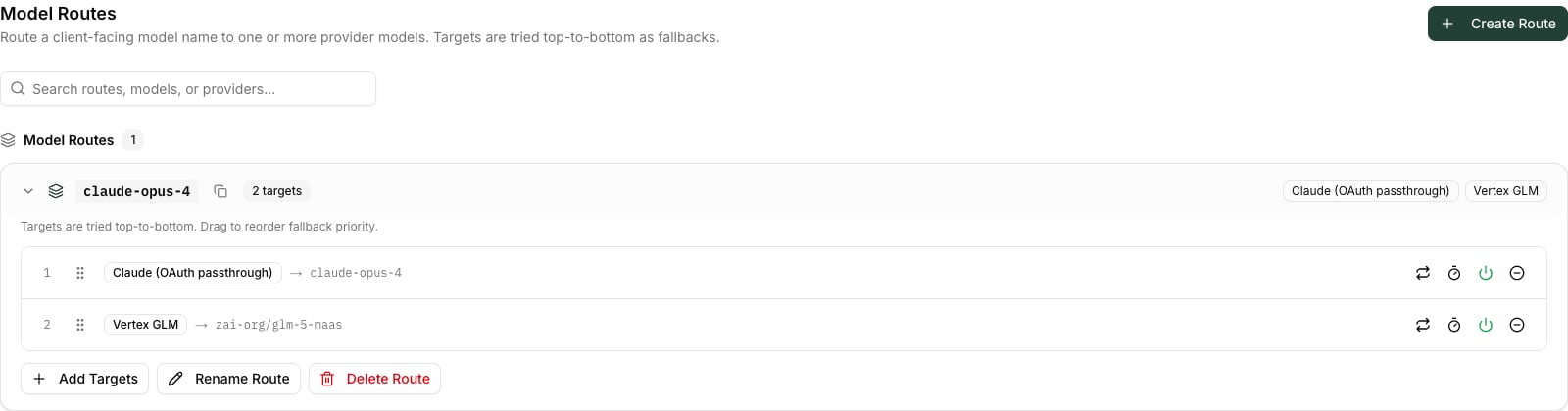
Targets are tried top to bottom. Set the primary’s Rate limit retries count if
you want the gateway to briefly retry the subscription before spilling; leave it at
0 to fail over immediately.
3. Create a gateway API key
Each developer creates their own key under Settings → My Models → API Keys. This authenticates Claude Code to the gateway; it is separate from your Claude subscription token, which the gateway forwards to Anthropic.Use a per-user key, not an unassigned org key from LLM Management → API Keys.
This pattern routes each developer’s own seat, so per-user attribution in the
usage dashboard — and any user-scoped model access policy — depends on the key
carrying a user identity.
4. Point Claude Code at the gateway
Stay logged into Claude Code with your Claude subscription so it sends its OAuth token, then set these environment variables and launchclaude:
x-api-key header authenticates you to the
gateway, while Claude Code’s Authorization: Bearer subscription token is
what the gateway forwards to Anthropic.